- Call: +1 (972) 215-6624,
- Email: [email protected]


Instructor: MASS Group Trainer
Data Science with AI & Machine Learning is a career-focused training program designed to equip learners with the skills and tools required to solve complex business problems using data. The course integrates core concepts of statistics, programming, and machine learning with real-time AI applications, preparing students for roles such as Data Scientist, ML Engineer, and AI Specialist.
Starting with Python fundamentals, the course dives into data analysis, data visualization, statistical modeling, machine learning algorithms, deep learning frameworks, and natural language processing. Learners will also gain exposure to real-world projects and deployment tools to make their solutions production-ready.
Python Programming for Data Science
NumPy, Pandas for Data Manipulation
Data Visualization with Matplotlib, Seaborn, Plotly
Statistics & Probability for Analytics
Machine Learning Algorithms (Supervised & Unsupervised)
Deep Learning with TensorFlow & Keras
Natural Language Processing (NLP)
Model Deployment using Flask, Streamlit, Docker
MLOps Basics, Versioning & GitHub Integration
Real-World Case Studies & Capstone Projects
Graduates from IT, Engineering, Math, or Statistics backgrounds
Working professionals in software, analytics, or BI
Beginners aspiring to enter the AI/ML field
Entrepreneurs and decision-makers who want to use data strategically
Analyze, process, and visualize complex data
Build, train, and deploy predictive ML & AI models
Work with deep learning architectures for image and text data
Solve real-world problems through end-to-end projects
Build a professional portfolio for job readiness in AI/ML roles
Week 1: Fundamentals of programming
Python for Data Science: Introduction
Python for Data Science: Data Structures
Python for Data Science: Functions
Python for Data Science: NumPy
Python for Data Science: Matplotlib
Python for Data Science: Seaborn
Python for Data Science: Pandas
SQL
Sample Interview Questions
Week 2: Exploratory Data Analysis (EDA) and Data Visualization
Data Science: Exploratory Data Analysis (EDA) and Data Visualization
Plotting for exploratory data analysis (EDA)
Linear Algebra
Probability and Statistics
Dimensionality reduction and Visualization, including PCA (principal component analysis) and T-distributed Stochastic Neighborhood Embedding (t-SNE)
Statistical Testing
Sample Interview Questions
Week 3: Foundations of NLP and Machine Learning
Introduction to Machine Learning
Performance measurement of models
Classification And Regression Models: K Nearest Neighbors, Naive Baye's, Linear Regression, and Logistic Regression
Classification algorithms in various situations
Real world problem: Predict rating on given product reviews on Amazon
Sample Interview Questions
Week 4: Machine Learning - Supervised Learning Models
Support vector Machines (SVM)
Decision Trees
Ensemble Models
Deployment of ML Models
Sample Interview Questions
Week 5: Machine Learning - Real-world Case studies
Case Study 1: Quora question Pair Similarity Problem
Case Study 2: Personalized Cancer Diagnosis
Case Study 3: Facebook Friend Recommendation using Graph Mining
Case study 4: Taxi demand prediction in New York City
Case study 5: Stack overflow tag predictor
Week 6: Unsupervised Learning Models (Recommender Systems + Real-world Case studies)
Unsupervised learning/Clustering
Hierarchical clustering Technique
DBSCAN (Density based clustering) Technique
Recommender Systems and Matrix Factorization
Interview Questions on Recommender Systems and Matrix Factorization
Case Study 6: Amazon fashion discovery engine (Content based recommendation)
Case Study 7: Netflix Movie Recommendation System (Collaborative based recommendation)
Case Study 8: Music Recommendation system
Sample Interview Questions
Week 7: Neural Networks, Computer Vision and Deep Learning
Deep Learning: Neural Networks, Deep Multilayer perceptrons
Deep Learning: Tensor Flow and Keras
Deep Learning: Convolutional Neural Nets
Deep Learning: Long Short-term memory (LSTMs)
Deep Learning: Generative Adversarial Networks (GANS) Encoder-Decoder Models
Deep Learning: Image Segmentation
Deep learning: Object Detection
OpenCV using Python
Interview Questions on Deep Learning
Week 8: Deep Learning and Transformers
Deep Learning-Real world case studies, including:
Case Study 10: Human Activity Recognition
Case Study 11: Self Driving Car
Case Study 12: Music Generation using Deep learning
Case Study 14: Building a Smart Gym Assistant from scratch
Introduction to Transformers
Attention Models in Deep learning Deep Learning: Transformers and BERT
Deep Learning: GPT, 2 and GPT 3 Models
Sample Interview Questions
0 Reviews
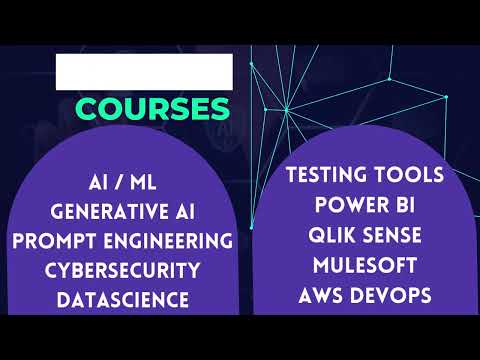

AWS DevOps combines the power of Amazon Web Services with DevOps practices to automate and streamline software development, deployment, and infrastructure management. It enables faster delivery, continuous integration & deployment (CI/CD), infrastructure as code (IaC), and scalable cloud solutions using tools like AWS CodePipeline, EC2, S3, CloudFormation, and more.

Prompt engineering is the practice of designing and refining instructions, or prompts, to get a desired output from a generative AI model. It's the process of giving an AI model clear, specific, and well-structured input to guide its response and improve its accuracy and relevance. Essentially, it's about crafting the best possible query to get the best possible answer from an AI.
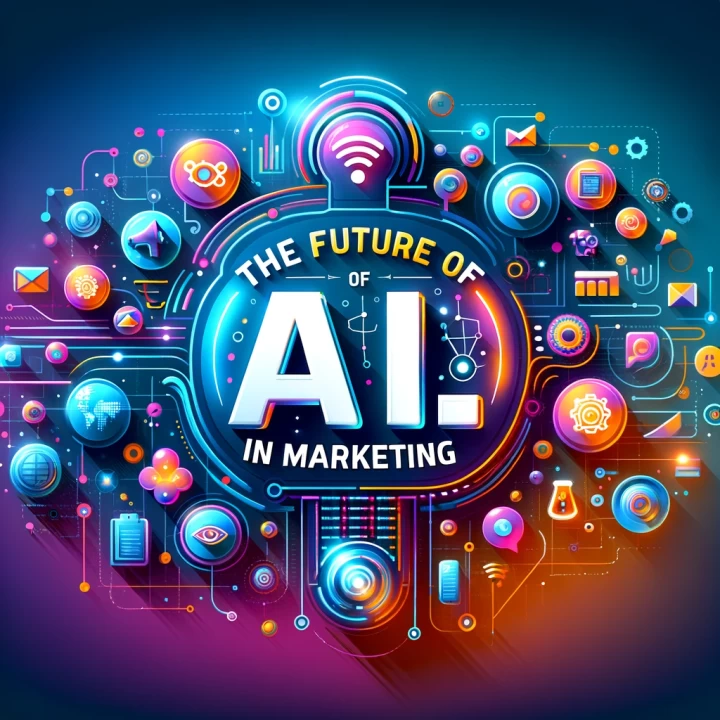
Digital Marketing with AI is a future-focused course that combines core digital marketing strategies with cutting-edge artificial intelligence tools. Learn how to optimize campaigns, automate customer journeys, generate content, analyze data, and boost ROI using AI-powered platforms like ChatGPT, Google AI, and automation tools. Perfect for marketers, entrepreneurs, and students looking to stay ahead in the digital world.